
The Little Book of Common Sense Investing: The Simple Wealth-Building Strategy Every Investor Should Know
Introduction
Most people believe successful investing requires finding the next multi bagger stock, predicting market crashes, or constantly tracking financial news. However, The Little Book of Common Sense Investing by John C. Bogle presents a completely different idea.
The book’s central message is simple: Instead of trying to beat the market, own the market.

John Bogle argues that ordinary investors can build significant wealth by investing in low-cost index funds and staying invested for the long term.
Although the book was written for American investors, its lessons are highly relevant for Indian investors today, especially with the growing popularity of index funds, SIPs, and passive investing.
Who Was John Bogle?
John Bogle was the founder of Vanguard Group and is widely regarded as the father of index investing.
In 1976, he launched the world’s first index mutual fund. At that time, many experts criticized the idea. Today, index funds manage trillions of dollars worldwide and are considered one of the most effective investment vehicles ever created.
His philosophy was straightforward:
“Don’t look for the needle in the haystack. Just buy the haystack.”
The Core Idea of the Book
The book revolves around one powerful concept:
Buy a low-cost index fund and hold it for decades.
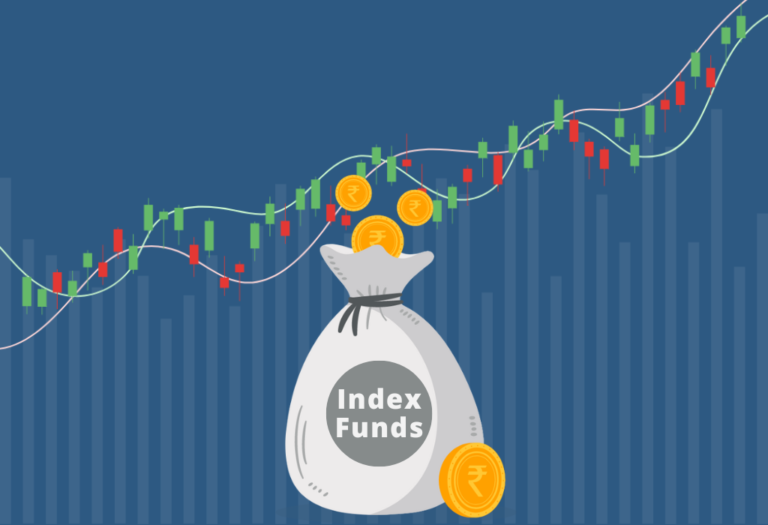
An index fund simply tracks a market index.
In India, examples include:
- NIFTY 50 Index Funds
- SENSEX Index Funds
- NIFTY Next 50 Index Funds
Instead of selecting individual stocks like:
- Reliance Industries
- Infosys
- SBI
- HDFC Bank
an index fund owns all the companies in the index. When the Indian economy grows, the index generally grows as well.
Lesson 1: Most Investors Cannot Beat the Market
Many investors believe they can consistently pick winning stocks. The reality is different.
Even professional fund managers struggle to outperform the market over long periods.
Why?
Because markets are highly competitive. Thousands of analysts, institutions, hedge funds, and investors are trying to find undervalued stocks every day.
By the time you discover a “hot stock,” its price often already reflects the available information.
Example
Imagine two investors.
Ram
Ram spends hours researching stocks.
He buys and sells frequently.
He follows business channels every day.
Ravi
Ravi invests ₹10,000 every month in a Nifty 50 Index Fund through SIP.
He ignores market noise.
After 20 years, Ravi may outperform Ram simply because he avoided mistakes, trading costs, and emotional decisions.
Lesson 2: Costs Matter More Than You Think
One of the strongest messages in the book is:
“You get what you don’t pay for.”
Every rupee paid in fees is a rupee that cannot compound.
Suppose two funds generate 12% annual returns.
- Fund A charges 0.2%
- Fund B charges 2%
The difference appears small.
Over 25 years, however, the higher-cost fund can leave investors with lakhs less due to the power of compounding.
Example
Investor A:
- Invests ₹10,000 monthly
- Uses a low-cost index fund
Investor B:
- Invests ₹10,000 monthly
- Uses expensive actively managed funds
After decades, Investor A may end up with significantly higher wealth simply because Investor B have these
1. Expenses remained higher.
2. May face Fund house related issues like bad news, fund manager changes.
Lesson 3: Time Is More Important Than Timing
Many people wait for:
- Market corrections
- Elections
- Budget announcements
- Global crises
before investing. The book teaches that trying to predict market movements is usually a losing game.
Indian Example
Suppose someone waited for the “perfect opportunity” after:
- COVID crash
- Election uncertainty
- Interest rate changes
They may have missed substantial market gains. A disciplined SIP investor keeps investing regardless of market conditions. The market rewards patience more than prediction.
Lesson 4: Compounding Is the Real Wealth Creator
Compounding is often called the eighth wonder of the world. The idea is simple: Your money earns returns. Then those returns start earning returns. Over time, growth accelerates dramatically.
Example
If you invest ₹5,000 per month from age 25 and earn 12% annually:
You could accumulate over ₹1 crore by retirement without ever finding a multibagger stock.
The secret is consistency. Not brilliance. This is one of the biggest lessons from the book.
Lesson 5: Stay Invested During Market Crashes
One of the most important lessons from The Little Book of Common Sense Investing is that market crashes are not a reason to abandon investing—they are a normal part of the investing journey.
When stock markets fall sharply, fear takes over. News channels predict more losses, social media is filled with panic, and many investors feel tempted to sell everything to “protect” their money. Unfortunately, this emotional reaction often does more damage than the crash itself.
John Bogle believed that successful investors understand a simple truth:
Market declines are temporary, but the decision to sell in panic can create permanent losses.
Every major market has experienced these:
- Crashes
- Recessions
- Panic selling
- Corrections
Yet markets have historically recovered and moved higher over long periods.
Indian Example
Investors who stayed invested through:
- Global Financial Crisis
- COVID-19 Market Crash
eventually saw markets recover.
Those who sold in panic often locked in losses.
Bogle emphasizes that emotional discipline is one of the greatest advantages an investor can have.
Lesson 6: Simplicity Beats Complexity
The financial industry often promotes complex products. But complexity does not guarantee better returns.
The book encourages investors to keep things simple:
- Invest regularly
- Diversify broadly
- Keep costs low
- Stay invested
That’s it. No complicated formulas. No constant trading. No market predictions.
How Investors Can Apply This Book
Here is a practical roadmap.
Step 1: Start a SIP
Invest monthly in a low-cost index fund.
Even ₹1,000–₹5,000 per month is enough to begin.
Step 2: Increase Investments Every Year
If your salary increases by 10%, increase your SIP by at least 10%.
This simple habit can dramatically boost long-term wealth.
Step 3: Ignore Daily Market Noise
Avoid checking your portfolio every hour.
Focus on long-term goals instead.
Step 4: Keep Costs Low
Choose investments with low expense ratios whenever possible.
Step 5: Stay Invested for Decades
The biggest rewards usually go to investors who remain patient for 15–30 years.
What Makes This Book Special?
Most investing books discuss:
- Stock picking
- Trading strategies
- Market predictions
This book focuses on something much more powerful.
Investor behavior.
Many people lose money not because they choose bad investments, but because they:
- Panic during crashes
- Chase trends
- Buy high
- Sell low
Bogle’s approach helps investors avoid these mistakes.
Key Takeaways
1. Own the market instead of trying to beat it.
2. Low-cost index funds often outperform many active funds over the long run.
3. Time in the market is more important than timing the market.
4. Compounding creates extraordinary wealth when given enough time.
5. Market crashes are normal and temporary.
6. Simplicity is one of the most powerful investment strategies.
7. Consistency matters more than intelligence in investing.
Final Thoughts
The Little Book of Common Sense Investing is not a book about getting rich quickly.
It is a book about getting rich slowly, steadily, and reliably. For investors, the message is especially relevant today. With easy access to index funds, SIPs, and digital investing platforms, building long-term wealth has never been simpler.
The book teaches that successful investing is not about finding the next ₹100-to-₹10,000 stock. It is about developing the patience to invest regularly, keeping costs low, and allowing compounding to work over decades. In a world full of market predictions and investment tips, John Bogle’s timeless advice remains refreshingly simple.
Invest regularly. Stay disciplined. Own the market. Let time do the heavy lifting.